Biblical Israel, Palestine, and Political Israel
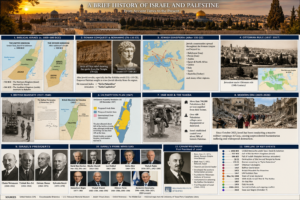
Biblical Israel (c. 1050–586 BCE): Abraham, Isaac, and Jacob form the foundation of the ancient Israelites.
- The Kingdom of Israel first appears around 1050 BCE, ruled by Saul, David, and Solomon.
- After Solomon’s death, the kingdom split into:
- Israel (north) – destroyed by Assyria in 722 BCE
- Judah (south) – destroyed by Babylon in 586 BCE
Roman Conquest and the Birth of the Name “Palestine.
”Where People Went After the Roman Conquest. Rome (many worked on major construction, including the Colosseum), North Africa (especially Egypt, Cyrenaica, Carthage). Large Jewish communities formed in Babylonia (Iraq) — already the largest Jewish center outside Judea; Persia (Iran); the Arabian Peninsula; Greece; Italy; Spain (later becoming Sephardic Jews); North Africa; Anatolia (modern Turkey); and the Ottoman Empire (1517–1917). World War I led to the collapse of the Ottoman Empire. Britain took control under the Mandate for Palestine. The Rothschilds bought a portion of Palestine from the British. The map granted about 56% of the land to the Jewish state. Jewish communities at that time owned less than 10% of the land. Zionist leadership accepted the Balfour Declaration, the British Mandate, and the plan. The political State of “Israel” (1948), the 1948 War, and the Nakba. Over 700,000 Palestinians fled or were killed by the Zionists. More than 400 villages were depopulated or destroyed. Israel established control over 78% of historic Palestine, 2023-2026. Israel is executing the second “Nakba”. This time, the Zionists are trying to displace and/or
kill the remaining two million Palestinians with help from the Americans. The world, except for Iran, is willing to let this happen.
Roman Renaming to “Palestina” (135 CE)
- After Jewish revolts against Rome, especially the Bar Kokhba revolt (132–135 CE),
Emperor Hadrian sought to erase Jewish identity from the region. - He renamed:
- Judea → “Syria Palaestina”
- Jerusalem → “Aelia Capitolina”
- “Palaestina” (from Philistia, the land of the ancient Philistines) was a deliberate Roman move to suppress the Jewish connection to the land.
🌍 3. The Name “Palestine” Thereafter
- “Palestine” continued under:
- Byzantine rule (4th–7th centuries)
- Islamic Caliphates
- Ottoman Empire (1517–1917)
- British Mandate (1920–1948)
The term “Palestine” during these eras described a region, not a specific independent state.
A Brief History of Israel and Palestine
- Biblical Israel (c. 1050–586 BCE): The ancient Israelites trace their origins to Abraham, Isaac, and Jacob.
- Roman Conquest (70–135 CE): After Jewish revolts, Rome renamed the region Palestina. Many Jews dispersed throughout the Roman Empire and beyond, establishing communities in Mesopotamia (Iraq), Persia (Iran), North Africa, Arabia, Greece, Italy, Spain, and Anatolia (Turkey).
- Ottoman Rule (1517–1917): Palestine remained part of the Ottoman Empire for four centuries.
- British Mandate (1917–1948): Following World War I and the collapse of the Ottoman Empire, Britain took control. The Balfour Declaration and growing Zionist immigration shaped the political landscape.
- UN Partition Plan (1947): The proposed plan allocated approximately 56% of the land to a Jewish state, although Jewish land ownership was less than 10% at the time. Zionist leaders accepted the plan; Arab leaders rejected it.
- State of Israel (1948): Israel declared independence on May 14, 1948.
- The 1948 War and Nakba: During the war, more than 700,000 Palestinians became refugees, and over 400 Palestinian villages were depopulated or destroyed. Israel emerged controlling about 78% of historic Palestine.
Israel’s first generation of Presidents and Prime Ministers was largely composed of immigrants from Eastern Europe, many born in territories that were then part of the Russian Empire. Over time, leadership increasingly shifted to people born in Israel itself. Understanding the origins of a nation’s leaders can help us better understand its history and development.
| President | Birthplace | Family/Ancestry |
|---|---|---|
| Chaim Weizmann | Motal, in present-day Belarus (then Russian Empire) | Ashkenazi Jewish family from Eastern Europe. |
| Yitzhak Ben-Zvi | Poltava, present-day Ukraine (then Russian Empire) | Ashkenazi Jewish family from Eastern Europe. |
| Zalman Shazar | Mir, present-day Belarus (then Russian Empire) | Born into a Hasidic Jewish family of Eastern European origin. |
| Ephraim Katzir | Kyiv, present-day Ukraine (then Russian Empire) |
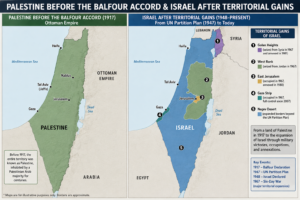
Palestine before the Russian Zionists were given 56 % of the land, and after they forcibly displaced or killed the Palestinian’s.
| Prime Minister | Years in Office | Birthplace |
|---|---|---|
| David Ben-Gurion | 1948–1953, 1955–1963 | Płońsk, Poland (Russian Empire) |
| Moshe Sharett | 1953–1955 | Kherson, Ukraine (Russian Empire) |
| Levi Eshkol | 1963–1969 | Oratov, Ukraine (Russian Empire) |
| Golda Meir | 1969–1974 | Kyiv, Ukraine (Russian Empire) |
| Yitzhak Rabin | 1974–1977, 1992–1995 | Jerusalem |
| Menachem Begin | 1977–1983 | Brest, Belarus (Russian Empire) |
| Yitzhak Shamir | 1983–1984, 1986–1992 | Ruzhany, Belarus |
| Shimon Peres | 1984–1986, 1995–1996 | Vishnyeva, Belarus |
| Benjamin Netanyahu | 1996–1999, 2009–2021, 2022–present |
The First President of Israel:
Chaim Azriel Weizmann (1874–1952) was a chemist, Zionist leader, and the first president of the State of Israel. Bridging science and politics, he played a decisive role in securing the 1917 Balfour Declaration and helped shape both modern Zionism and Israel’s scientific foundation.
Key facts
Born: November 27, 1874, Motol, Russian Empire (now Belarus)
Died: November 9, 1952, Rehovot, Israel
Major roles: President, World Zionist Organization; President of Israel (1949–1952)
Scientific legacy: Developed acetone fermentation process; founded Weizmann Institute of Science
Notable achievement: Instrumental in obtaining the Balfour Declaration
Founding president of Israel
In 1948, Weizmann’s negotiations with Harry S. Truman helped secure U.S. recognition of Israel’s independence. Elected the new state’s first president in 1949, he served largely as a moral and unifying figurehead. Despite ill health and blindness in later years, he remained a respected symbol of Israel’s founding generation.
Referencing:
Personal Note:
Nothing about the “Political State Of Israel”, is related to the “Biblical Israel”. The Zionists have been killing people and stealing their land since the Rotchilds bought 56% of Palestine. School books were
re-written by Israel media.
Thank you for reading,
Michael.
Comments are welcome.
- Israel (north) – destroyed by Assyria in 722 BCE
- Judah (south) – destroyed by Babylon in 586 BCE
Roman Conquest and the Birth of the Name “Palestine.
”Where People Went After the Roman Conquest. Rome (many worked on major construction, including the Colosseum), North Africa (especially Egypt, Cyrenaica, Carthage). Large Jewish communities formed in Babylonia (Iraq) — already the largest Jewish center outside Judea; Persia (Iran); the Arabian Peninsula; Greece; Italy; Spain (later becoming Sephardic Jews); North Africa; Anatolia (modern Turkey); and the Ottoman Empire (1517–1917). World War I led to the collapse of the Ottoman Empire. Britain took control under the Mandate for Palestine. The Rothschilds bought a portion of Palestine from the British. The map granted about 56% of the land to the Jewish state. Jewish communities at that time owned less than 10% of the land. Zionist leadership accepted the Balfour Declaration, the British Mandate, and the plan. The political State of “Israel” (1948), the 1948 War, and the Nakba. Over 700,000 Palestinians fled or were killed by the Zionists. More than 400 villages were depopulated or destroyed. Israel established control over 78% of historic Palestine, 2023-2026. Israel is executing the second “Nakba”. This time, the Zionists are trying to displace and/or
kill the remaining two million Palestinians with help from the Americans. The world, except for Iran, is willing to let this happen.
Roman Renaming to “Palestina” (135 CE)
- After Jewish revolts against Rome, especially the Bar Kokhba revolt (132–135 CE),
Emperor Hadrian sought to erase Jewish identity from the region. - He renamed:
- Judea → “Syria Palaestina”
- Jerusalem → “Aelia Capitolina”
- “Palaestina” (from Philistia, the land of the ancient Philistines) was a deliberate Roman move to suppress the Jewish connection to the land.
🌍 3. The Name “Palestine” Thereafter
- “Palestine” continued under:
- Byzantine rule (4th–7th centuries)
- Islamic Caliphates
- Ottoman Empire (1517–1917)
- British Mandate (1920–1948)
The term “Palestine” during these eras described a region, not a specific independent state.
A Brief History of Israel and Palestine
- Biblical Israel (c. 1050–586 BCE): The ancient Israelites trace their origins to Abraham, Isaac, and Jacob.
- Roman Conquest (70–135 CE): After Jewish revolts, Rome renamed the region Palestina. Many Jews dispersed throughout the Roman Empire and beyond, establishing communities in Mesopotamia (Iraq), Persia (Iran), North Africa, Arabia, Greece, Italy, Spain, and Anatolia (Turkey).
- Ottoman Rule (1517–1917): Palestine remained part of the Ottoman Empire for four centuries.
- British Mandate (1917–1948): Following World War I and the collapse of the Ottoman Empire, Britain took control. The Balfour Declaration and growing Zionist immigration shaped the political landscape.
- UN Partition Plan (1947): The proposed plan allocated approximately 56% of the land to a Jewish state, although Jewish land ownership was less than 10% at the time. Zionist leaders accepted the plan; Arab leaders rejected it.
- State of Israel (1948): Israel declared independence on May 14, 1948.
- The 1948 War and Nakba: During the war, more than 700,000 Palestinians became refugees, and over 400 Palestinian villages were depopulated or destroyed. Israel emerged controlling about 78% of historic Palestine.
Israel’s first generation of Presidents and Prime Ministers was largely composed of immigrants from Eastern Europe, many born in territories that were then part of the Russian Empire. Over time, leadership increasingly shifted to people born in Israel itself. Understanding the origins of a nation’s leaders can help us better understand its history and development.
| President | Birthplace | Family/Ancestry |
|---|---|---|
| Chaim Weizmann | Motal, in present-day Belarus (then Russian Empire) | Ashkenazi Jewish family from Eastern Europe. |
| Yitzhak Ben-Zvi | Poltava, present-day Ukraine (then Russian Empire) | Ashkenazi Jewish family from Eastern Europe. |
| Zalman Shazar | Mir, present-day Belarus (then Russian Empire) | Born into a Hasidic Jewish family of Eastern European origin. |
| Ephraim Katzir | Kyiv, present-day Ukraine (then Russian Empire) |
Palestine before the Russian Zionists were given 56 % of the land, and after they forcibly displaced or killed the Palestinian’s.
| Prime Minister | Years in Office | Birthplace |
|---|---|---|
| David Ben-Gurion | 1948–1953, 1955–1963 | Płońsk, Poland (Russian Empire) |
| Moshe Sharett | 1953–1955 | Kherson, Ukraine (Russian Empire) |
| Levi Eshkol | 1963–1969 | Oratov, Ukraine (Russian Empire) |
| Golda Meir | 1969–1974 | Kyiv, Ukraine (Russian Empire) |
| Yitzhak Rabin | 1974–1977, 1992–1995 | Jerusalem |
| Menachem Begin | 1977–1983 | Brest, Belarus (Russian Empire) |
| Yitzhak Shamir | 1983–1984, 1986–1992 | Ruzhany, Belarus |
| Shimon Peres | 1984–1986, 1995–1996 | Vishnyeva, Belarus |
| Benjamin Netanyahu | 1996–1999, 2009–2021, 2022–present |
The First President of Israel:
Chaim Azriel Weizmann (1874–1952) was a chemist, Zionist leader, and the first president of the State of Israel. Bridging science and politics, he played a decisive role in securing the 1917 Balfour Declaration and helped shape both modern Zionism and Israel’s scientific foundation.
Key facts
Born: November 27, 1874, Motol, Russian Empire (now Belarus)
Died: November 9, 1952, Rehovot, Israel
Major roles: President, World Zionist Organization; President of Israel (1949–1952)
Scientific legacy: Developed acetone fermentation process; founded Weizmann Institute of Science
Notable achievement: Instrumental in obtaining the Balfour Declaration
Founding president of Israel
In 1948, Weizmann’s negotiations with Harry S. Truman helped secure U.S. recognition of Israel’s independence. Elected the new state’s first president in 1949, he served largely as a moral and unifying figurehead. Despite ill health and blindness in later years, he remained a respected symbol of Israel’s founding generation.
Referencing:
Personal Note:
Nothing about the “Political State Of Israel”, is related to the “Biblical Israel”. The Zionists have been killing people and stealing their land since the Rotchilds bought 56% of Palestine. School books were
re-written by Israel media.
Thank you for reading,
Michael.
Comments are welcome.